
March 23, 2026•
8:51 AM•
Real Estate
• One Comment
Views: 5,602
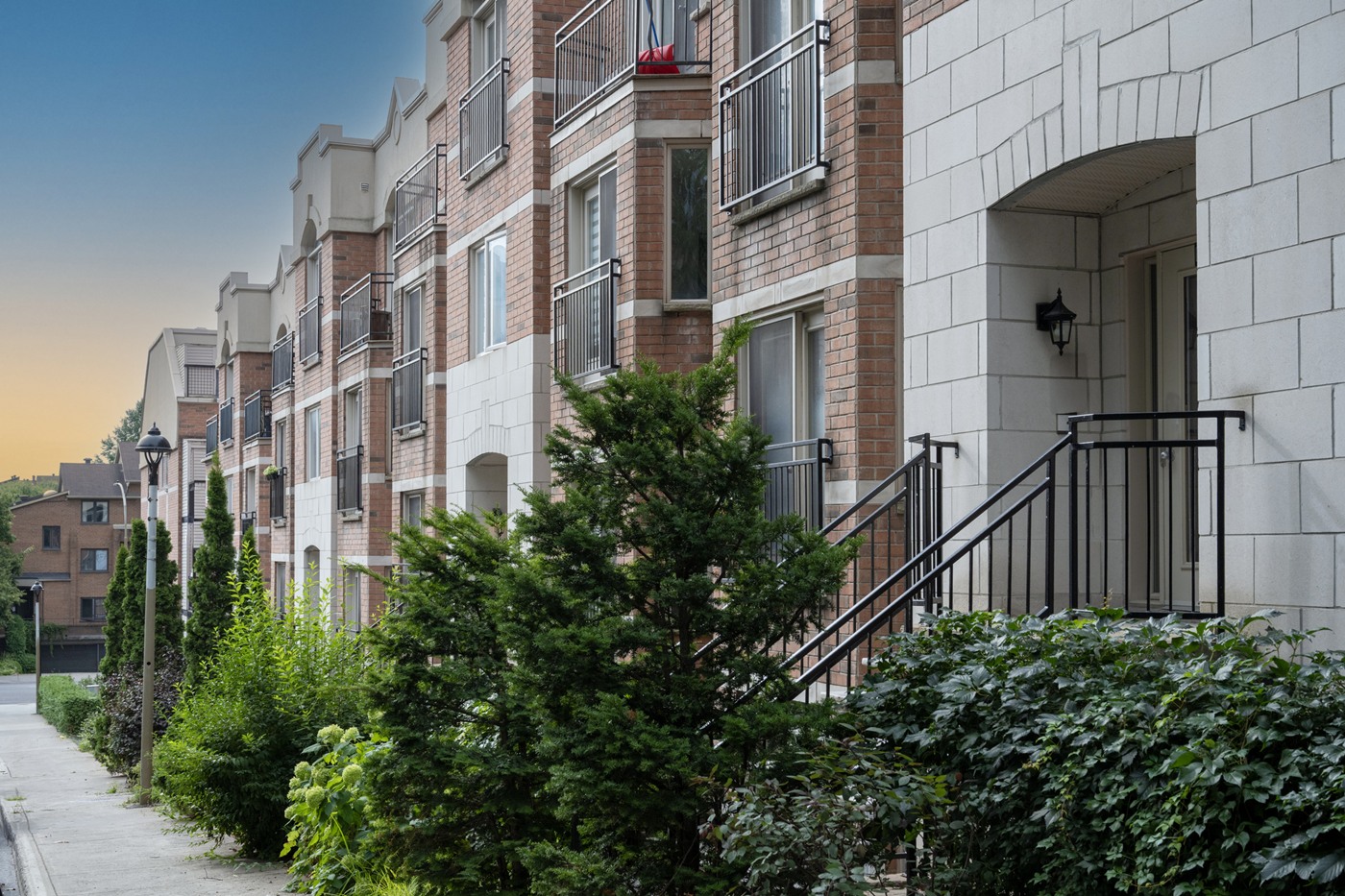
As condo projects stall and detached homes remain out of reach for most buyers, multiplexes are gaining traction as Toronto’s next supply channel.
For a city built on high-rise condos, the shift toward “gentle density” housing also requires adjustment from investors, developers, owners and residents. Early signs suggest that transition is already underway.
According to a report by the City of Toronto published last May, the city received 750 multiplex building permit applications between May 12, 2023 and November 4, 2024, more than triple the number submitted between 2020 and 2022.

According to CMHC’s Spring 2026 Housing Supply Report, construction of three-to-five-unit structures has surpassed that of 100-plus-unit projects for the first time in Toronto’s history.
“In 2025 and this year we’ve seen a shift away from large, multi-residential tower projects, especially condos, towards smaller, faster to build, lower-density housing projects, whether it’s multi-plexes, row and townhouses, or conversions and secondary suites,” says CMHC chief economist Mathieu Laberge. “From 2018 to 2023 they were growing about 5% per year in Canada’s six major cities, and between 2023 and 2024 that surged to 44%.”
Laberge says the surge is supported by all levels of government, which have remained aligned in promoting “missing middle” housing in Canada’s major cities. “There’s a very intentional process of reviewing urban plans and regulation to make it possible and to enhance access to multiplexes and missing middle as a housing option,” Laberge says.
For example, the Housing Accelerator Fund incentivized cities to allow multiplexes of up to four units as a right, eliminating the need for lengthy rezoning procedures. Toronto adopted the policy in 2023 and expanded to include six-unit multiplexes in certain areas in 2025. The province of Ontario, meanwhile, allowed for the addition of one or two units to an existing property province-wide without rezoning in 2024.
“It’s not the majority of housing starts [nationally], but when you look at the last three years, missing middle is really what fueled the growth,” Laberge says. “If you remove missing middle starts from total starts, we saw a moderation as early as 2023. Because of missing middle, housing starts have grown over the last couple years, and to me that’s a testament to their attractiveness.”
Will Toronto buyers embrace multiplex housing?
As more low-density, multi-unit housing comes online, it remains to be seen whether Torontonians are ready to trade condo ambitions for multiplex ownership.

Unlike Montreal, Calgary and Edmonton, where multiplexes have long been part of the housing mix, Torontonians remain less familiar with them and more wary of the management responsibilities they entail.
“There is a fear here in Ontario that, ‘oh my gosh, I don’t want to be a landlord, I don’t want to own something and manage tenants in these other units,’ especially with the complications at the Ontario Landlord and Tenant Board,” says Dalia Barsoum, the founder of Streetwise Mortgages. “That is a real fear that is a friction point for people getting excited about this idea.”
If they can get past that fear, which Barsoum says can be addressed with support from legal, mortgage and real estate professionals, there is a real opportunity for buyers in an otherwise quiet market. That’s because owner-occupants can put down as little as 5% and often use projected rental income to qualify for a mortgage.
“Buying a duplex or a triplex or a five-plex or a six-plex opens up their capacity to own an asset that they may not have qualified for otherwise,” Barsoum says. “They’re getting cash flow, they’re accumulating equity, and it’s likely that asset will be worth more than a condo over time because they own the land it’s on. For me it’s a no-brainer, but I don’t see people jumping in and getting excited, because of this whole fear of being a landlord.”
The rise of the “citizen developer”
Toronto’s condo boom was led by a small group of large developers, but those builders are less inclined to move into lower-volume, low-rise projects. Any multiplex boom will likely be driven by what Daniel Foch, Chief Real Estate Officer at Valery.ca and host of the Canadian Real Estate Investor podcast, describes as “citizen developers.”

“It’s a pretty solid wealth creation tool and opportunity for small mom-and-pop investors, democratizing the ability to create housing and taking it away from this oligopolistic space that was really dominated by only the big players before,” he says.
Rather than buying a turnkey condo investment from one of those developers, Foch says investors can now see greater returns by converting an underutilized lot or adjacent lots into a multiplex development, though it will require more time and energy upfront.
“If you’re doing this, you are functionally becoming a developer, and large developers have big teams in-house, or hire out architecture, planning, legal, etc.,” he says. “You really need to build a strong network of people who are experts in this space. That’ll help you de-risk, because while the math does work, the margins are quite tight, so the margin for error is very small.”
Foch also notes that CMHC’s MLI Select financing remains the most popular funding strategy for multiplex developments due to its insurability.
“You have some construction programs that are being well utilized from lenders like EQ Bank and Desjardins,” he says. “The alt-A, credit union side of things has been really making an effort to win the business of these investors, because it’s not something that necessarily fits the books of the Big Six, who are looking for easier deals to do at scale.”
Giving Toronto a low-rise makeover
Foch predicts that Toronto’s condo market correction has only just begun, meaning the city may see little in the way of new high-rise development for years to come. In the meantime, buyers, investors and developers are turning to alternatives, with multiplexes emerging as one option.
But shifting from condos as the primary driver of housing development to smaller-scale projects would represent a significant change for a city built on towers, not just economically or architecturally, but culturally.
Foch sees that as a positive, noting that many of the world’s most aesthetically pleasing, walkable and liveable cities and neighbourhoods are dominated by low-rise housing, from Paris and Copenhagen to Old Montreal and New York’s SoHo. Even in Toronto, multiplex-heavy pockets like the Annex and the Queen and Ossington area have been lauded as some of the city’s most desirable.
Depending on how long the condo market stalls, the city could start to look more like Bloor and Spadina than King and Spadina, offering housing options that are larger than a typical condo and more attainable than a detached home.
“When London was seeing a similar demographic boom and everyone wanted to move there but they didn’t have enough housing supply, they took all these old row houses and cut them up into what we now call flats, and that was an organic thing,” Foch says. “That’s the phase we’re going through — we’re just 100 years behind London in that demographic cycle.”
Visited 5,602 times, 1 visit(s) today
CMHC condo market Dalia Barsoum Daniel Foch Mathieu Laberge Missing Middle Initiative multi-unit buildings multiplex real estate toronto toronto real estate market
Last modified: March 23, 2026
